


Why Does Acepsis®
Focus On Chlorine Dioxide?
Acepsis® CIO₂ is an exceptionally efficient solution for hygiene, offering enhanced cleaning efficacy compared to other oxidizing agents.


Acepsis ClO₂: Unmatched Hygiene Power
Q: What makes Acepsis chlorine dioxides (ClO₂) so effective in hygiene applications?
A: Acepsis chlorine dioxides stand out because of their unmatched strong oxidation characteristics , measured by their ORP. No other formulations provide a faster, more consistent oxidation performance across a wide spectrum at low concentrations. This makes Acepsis’ ClO₂ an exceptionally efficient solution for hygiene, offering enhanced cleaning efficacy compared to other oxidizing agents.

Background Information:
Oxidation-Reduction Potential (ORP) is a measure of a solution’s ability to oxidize and is commonly used as a process-monitoring metric . In the context of cleaning and hygiene solutions, ORP helps determine their strength and effectiveness. Here’s how ORP provides valuable information about effectiveness:
-
- Indicates Oxidizing Strength: Higher ORP values indicate a stronger oxidizing environment, meaning the solution is more effective. . For example, a solution with an ORP of 650 mV or above is considered highly effective for livestock hygiene applications.
- Measures Speed of Action: ORP levels can correlate with how quickly a hygiene solution works. The higher the ORP, the quicker it can disrupt cell walls, proteins, and DNA, effectively reducing the necessary contact time to achieve optimal hygiene.
- Compares Efficacy Across Hygiene Solutions: ORP allows for a direct comparison of effectiveness between different cleaning and hygiene solutions. For example, Acepsis chlorine dioxides often have a higher ORP compared to iodine, other oxidizing agents or even other chlorine dioxides, indicating their broader and faster action.
- Maintains Residual Activity: A hygiene solution with a high ORP can continue to be effective over time, even as it encounters organic material. Acepsis chlorine dioxides, for instance, maintain a high ORP in the presence of organic material, whereas other oxidizing agents like chlorine or iodine may lose their effectiveness faster.
In summary, ORP provides a quick and reliable way to assess and compare the effectiveness of different solutions. A higher ORP generally indicates a stronger and faster oxidation potential, making it a valuable parameter in selecting effective hygiene solutions, especially for dairy farm applications.
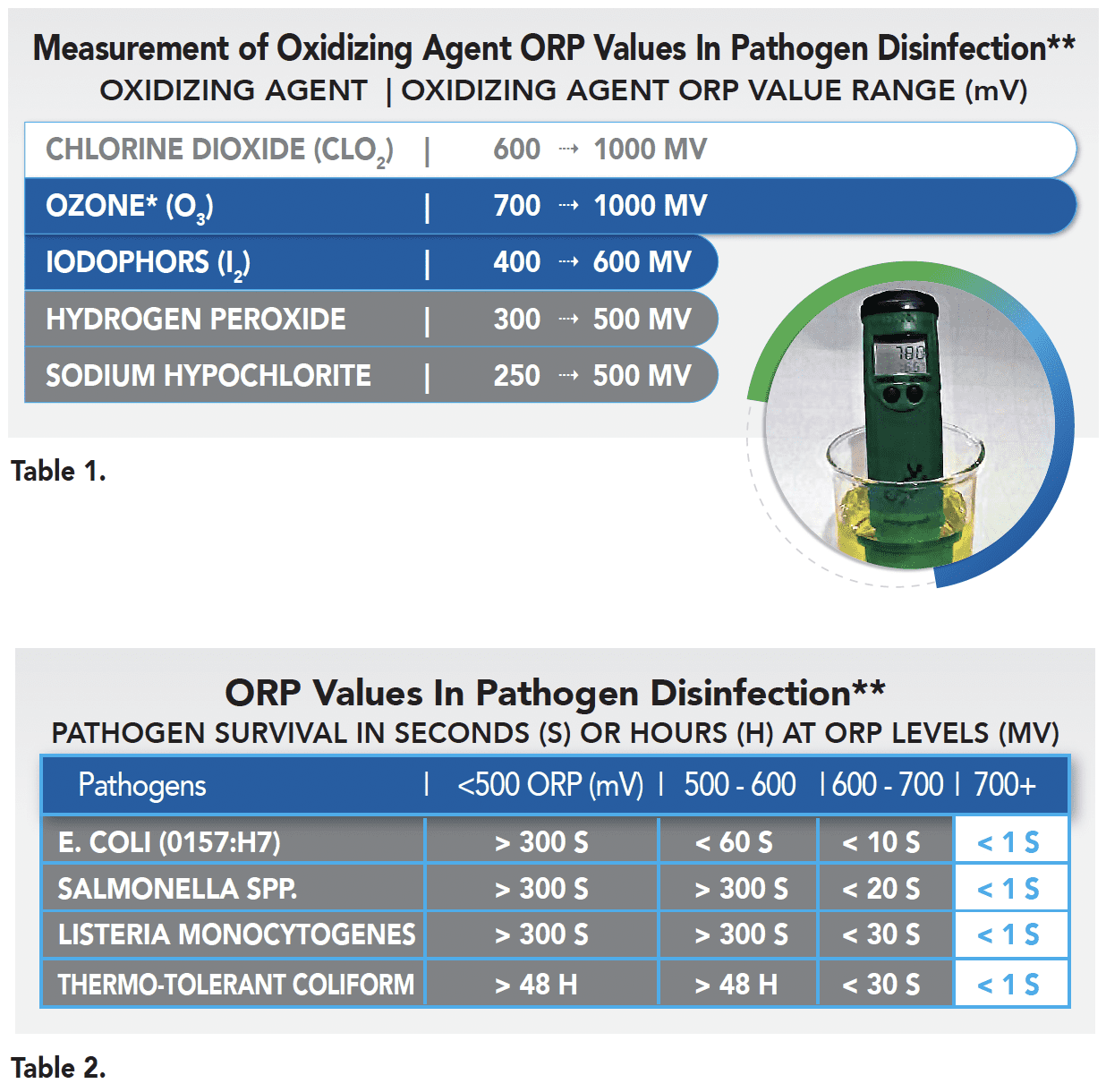
Table 1. provides the oxidizing range of the most popular sanitizing agents in the industry. The higher the Oxidation Reduction Potential (ORP), the more efficient it is. This is measured in millivolts (mV).
Table 2. shows the relative survival rate of different pathogens and the role that oxidation power has in the disinfection process, using the ORP (mV) value to measure the rates. Based on the numbers from Table 1, chlorine dioxide is a clear winner over hydrogen peroxide.
*Ozone is greatly influenced by the water quality and ozonation system
***Oxidation Reduction Potential (ORP) for Disinfection Monitoring, Control and Documentation; University of California, Trevor Suslow, Department of Vegetable Crops, University of California – Davis
Understanding Chlorine Dioxide:
Q: What exactly is chlorine dioxide?
A: Chlorine dioxide (ClO₂) is a highly effective oxidizer. It disrupts cell walls by accepting electrons, making it extremely effective. ClO₂ is generated by reacting sodium chlorite with an acid (e.g., citric or hydrochloric acid), producing a gas that dissolves in water and remains active.
Q: Is ClO₂ the same as chlorine gas or bleach?
A: No, despite having “chlorine” in its name, chlorine dioxide is very different from chlorine gas or bleach. While chlorine and bleach react to form acids when in water, ClO₂ stays dissolved as a gas. It’s effective across a broad pH range (from 2 to 12), unlike chlorine and bleach, which are limited by pH. This stability makes ClO₂ both versatile and more effective across varied environments.

How Chlorine Dioxide Works:
Q: How does ClO₂ work as a hygiene agent and does it become less effective over time because of resistance to it?
A: Chlorine dioxide functions by disrupting vital cell processes and penetrating the cell wall, inactivating them from the inside out. Contaminants cannot develop resistance to ClO₂, eliminating the need for alternating solutions. It’s especially effective against sulfate-reducing and acid-producing contaminants, which are vulnerable to its oxidation effects.
Q: What other compounds does ClO₂ compare to in oxidation strength?
A: Chlorine dioxide has a high Oxidation-Reduction Potential (ORP) of 600–900 mV, making it a stronger oxidizer than iodine and hydrogen peroxide. Even at low concentrations, ClO₂’s effectiveness is superior, achieving faster and broader results than many alternatives.
Not All Chlorine Dioxides Are Created Equal:
Q: Are all chlorine dioxide solutions the same?
A: No, each Acepsis chlorine dioxide formulation is unique in composition and intended use. The efficacy of each can be measured by its Oxidation-Reduction Potential (ORP) value, which varies between products based on their specific design and application.
Even if products are classified as “chlorine dioxide,” their effectiveness and purposes can differ significantly.


Using Chlorine Dioxide in Practice:
Q: Can chlorine dioxide be stored and transported like other cleaning and hygiene solutions?
A: No, chlorine dioxide must be produced on-site, as it can’t be compressed for transport. It’s created using a two-part system (base and activator) that can be mixed manually or with automated equipment, offering flexibility in usage and reducing storage and transportation needs.
Q: Is ClO₂ safe for agricultural and animal applications?
A: Yes, ClO₂ has been safely used in water treatment for more than 70 years. Its selective oxidizing properties make it ideal for animal and facility hygiene, water treatment, and bedding sanitation. Acepsis provides thorough training on ClO₂’s safe application, ensuring its effective use in agriculture.

Applications of Chlorine Dioxide:
Q: Where is chlorine dioxide commonly used?
A: ClO₂ is used in various sectors, including municipal water treatment, food and beverage sanitation, cooling towers, and hospitals for disinfection and odor control. It has also replaced iodine in dairy hygiene due to its superior performance and safety profile.
Q: Is it difficult to produce ClO₂ on-site?
A: No, producing ClO₂ on-site is straightforward, with easy mixing instructions or fully automated equipment. Automation allows precise dosing and customized treatment, making it suitable for even complex hygiene applications.
Acepsis’ Specialized ClO₂ Formulations:
At Acepsis®, we have three distinct chlorine dioxide solutions, each designed for specialized applications:
- NOVA Activ/Base (NOVA PREP/NOVA POST): Tailored for teat dip applications, ensuring effective pre- and post-milking hygiene.
- HabiStat Activator & Base: Ideal for calf care, specifically formulated for cleaning housing and feeding equipment.
- AquaSoar Activator & Base: Engineered for water treatment needs, providing targeted efficacy in water sanitation.
Q: Why is it important to differentiate between these formulations?
A: Each formulation is optimized for a particular environment, and built specifically to that environment’s application. By understanding specific application requirements, you can achieve the best hygiene outcomes. Whether you’re looking at Acepsis® products or comparing with competitors, ORP value testing can help demonstrate the differences in performance across chlorine dioxide solutions.

Why Acepsis ClO₂ Solutions Lead in Quality:
Q: Are all ClO₂ solutions equally effective?
A: No, Acepsis’ ClO₂ solutions excel due to optimized formulation factors: stronger acid activators, precise pH, reaction time, and minimized byproducts. These solutions maintain high Oxidation-Reduction Potential (ORP) and effective concentration levels, which translate to faster, broader oxidation range
and longer-lasting operational performance.
Q: What are the measurable benefits of Acepsis ClO₂ in livestock operations?
A: With high PPM (parts per million) outcomes and ORP values, Acepsis’ ClO₂ solutions offer:
- Faster and more effective performance
- Stronger oxidizing power for broader applications
Extended effectiveness over time

Chlorine Dioxide: The Recognized Standard in Hygiene:
Q: How is chlorine dioxide recognized in the industry?
A: ClO₂ is approved by major health and environmental agencies, including the FDA, CDC, and EPA, for its safe, powerful disinfection across various applications. Acepsis’ ClO₂ solutions meet these high standards, making them the top choice for comprehensive hygiene needs.
